
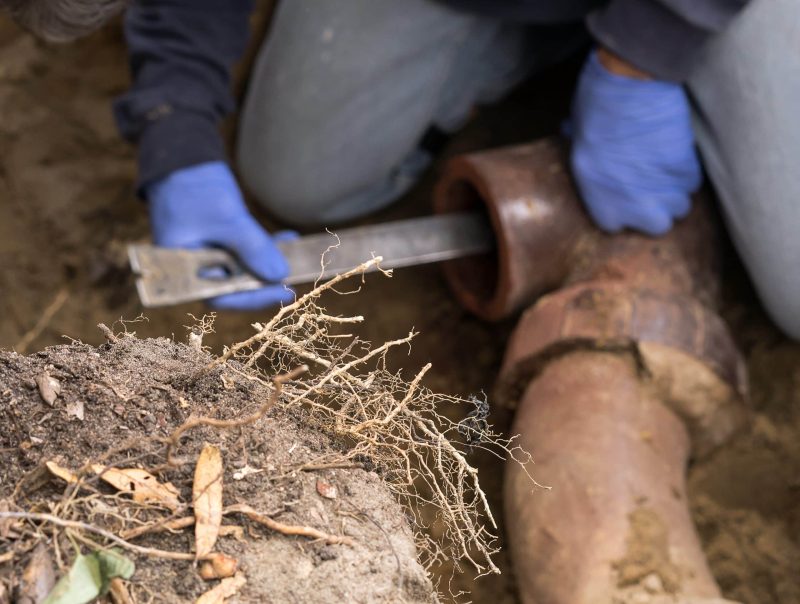


A recurring sewer line blockage can be frustrating, especially when the same problem returns after the line has been cleared. Tree roots are one possible reason. As roots grow underground, they can enter small openings or joints in sewer pipes, where they keep growing and interfere with wastewater flow. When drain unclogging only provides a temporary solution, understanding the cause of recurring blockages can help determine what to do next.
How Do Tree Roots Get Into Sewer Lines?
Tree roots naturally seek out sources of water and nutrients beneath the ground. Even a small crack, loose connection, or damaged joint in a sewer line can create an opportunity for roots to enter.
Once inside, roots can keep growing and form a dense mass within the pipe. This can catch toilet paper, debris, and other materials moving through the line, gradually restricting wastewater flow.
The location of nearby trees doesn’t necessarily tell you exactly where the problem is, either. Roots can travel considerable distances underground in search of moisture, which is why identifying the affected section of pipe is an important part of addressing the problem.
Why Does the Problem Keep Returning?
Clearing a blockage can restore flow, but that doesn’t necessarily remove the underlying root growth. If roots remain inside the pipe, they can continue growing and create another obstruction.
This is why recurring backups can signal that something beyond routine drain unclogging may be needed. When a blockage repeatedly develops in the same sewer line, investigating the pipe’s condition can help determine whether tree roots or another issue is responsible.
How Does Professional Derooting Work?
Before derooting begins, All Drain Services performs a preliminary video inspection to determine whether the line is appropriate for the service and identify where the root growth is located.
A specialized expandable derooting blade is then used to remove the roots from inside the pipe. Rather than simply pushing through the obstruction, the equipment is designed to grab and remove the root growth.
After the derooting process is complete, another video inspection is performed to confirm that the roots were successfully cleared. This gives the technician a visual look at the results and a clearer picture of the line’s condition.
When Should You Consider Derooting?
Recurring sewer backups, slow drainage, or repeated blockages can all be reasons to have the line evaluated. A professional inspection can help determine whether tree roots are actually contributing to the problem rather than assuming every recurring clog has the same cause.
Addressing root growth can be especially important when a sewer line keeps having problems despite previous attempts to unclog it.
Get to the Root of the Problem With All Drain Services
If tree roots are causing repeated problems with your sewer line, you don’t necessarily have to keep dealing with the same blockage over and over. All Drain Services can inspect the line, determine whether derooting is appropriate, and remove root growth using specialized equipment. If you’re dealing with recurring backups or blockages, reach out to our team today to find out whether derooting could be the right solution for your sewer line.
Follow us on Facebook for drain maintenance tips, service information, and updates from our team.